Rubbing or Pressing: What’s the Best Way to Apply Skin Care Products?

Whenever I travel to France to study skin care, I find that French estheticians always promote that you should use a patting or pressing technique when applying moisturizer or serum. The idea that has been explained to me is that it is a better way to treat the skin gently (especially for sensitive skins) and some have said that by patting moisturizer or serum with gentle pressure onto the skin, you are essentially pushing it into the skin, and this may enhance absorption more effectively.

Read: Are You Using a Skin Serum? If Not, You Should Be

While I have not personally seen any studies proving that theory, I suppose it could make sense. The goal with skin care products is always to get them to penetrate deeper within the skin and I have seen data that applying a serum or moisturizer to damp skin can enhance absorption up to 10%. This is why I always suggest leaving an alcohol-free toner damp before applying your serum or moisturizer to allow for that effect.

See the collection of Renée Rouleau toners.

A circular rubbing motion when applying creams and serums, depending on how much pressure you apply to the skin, can help increase blood flow and help with lymphatic drainage, which for certain skin types (not overly red type skins or those with Rosacea) may benefit from this minor increase to blood flow.

Read: How Do I Get Rid of Broken Capillaries?Read more


A Safer Alternative for Treating Brown Patches on the Skin

Stubborn brown spots, sun spots, and brown patches on the skin are a concern for many, and while there are topical skin care products that can help to encourage their fading, one in particular is not without controversy. Hydroquinone is a commonly used skin bleaching agent that inhibits Tyrosinase, an enzyme involved in producing pigment. The controversy around Hydroquinone revolves around redness and skin irritation, but some reports have shown it as possibly causing liver cancer and leukemia in rats. Countries such as Europe, South Africa, and Japan have banned its use, but in the United States, the Food and Drug Administration (FDA) still considers it safe and it is commonly prescribed by dermatologists.

While I generally support the FDA, and have seen the positive impact it can make in reducing these stubborn brown spots for many of my clients, I do understand people’s concern in wanting to find a natural, less controversial solution. Adding to the controversy, the Texas Attorney General’s office has made one known Hydroquinone maker remove all their products using this ingredient from the shelves of spas and medical offices. So, for those who live in Texas, Hydroquinone may be harder to access. This also has happened in the state of Florida.

For a Hydroquinone-free alternative, look for products that contain high concentrations of Magnesium Ascorbyl Phosphate, Kojic Acid, and Licorice Extract (Glycyrrhiza glabra), which can help inhibit melanin production… Read more


How to Prevent Summer Sun Spots

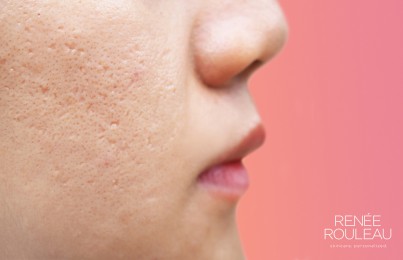
For those prone to hyperpigmentation (commonly referred to as discoloration, brown spots, age spots or sun spots), you have probably noticed that during the summer, they can become more visible.

While hyperpigmentation can be a challenge, both to prevent and fade, these skin care tips can definitely help in your quest for more evenly-toned skin during the hot summer months.

Tip: Wear sunscreen–applied generously and often

The number one cause of premature skin aging is wrinkles, and certainly exposing your skin to the sun can bring out sun spots. But did you know that most people do not apply enough sunscreen to give the skin the protection it needs? The real truth to sunscreen is not about the SPF number (although an SPF 15 is the minimum you should ever wear) but it is how generously it is applied, and certainly how often it is reapplied when outdoors.

Especially for oily skin, it is key to find a sunscreen that won’t feel heavy and greasy on the skin, so you can apply it with a heavy hand without worrying about it causing clogged pores and breakouts.

Read: How to Apply Sunscreen to the Face and Neck

Tip: Limit exposure to both heat and sun… Read more


What Type of Facial Mask is Best for My Skin?

While not considered an essential in a basic and simple skin care routine, I do consider masks to be an important part of achieving healthy, beautiful skin. Because everyone’s skin is unique, masks are not one-size fits all. It is important that you use the right mask for your skin type. Here’s the breakdown on the types of masks that are available.

Gel masks: These are usually oil-free and have a gel consistency. (See Azulene Gel Mask)They are best for hydrating the skin, so they are beneficial for oily, combination, acne-prone, dehydrated skin, where you want to add water to the skin, but not add any oil. Because of their naturally cold temperatures, they are also ideal for soothing redness in sensitive skin, as well as soothing sunburns. I personally love using a gel mask in the summertime because they feel so cooling on the skin and keep my skin plump and hydrated during the hot Texas summer… Read more


The One Product My Skin Can’t Live Without

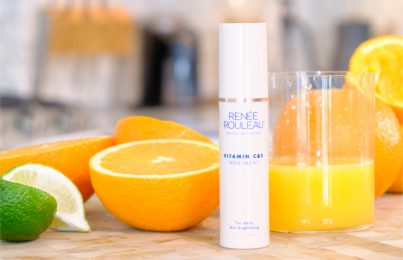
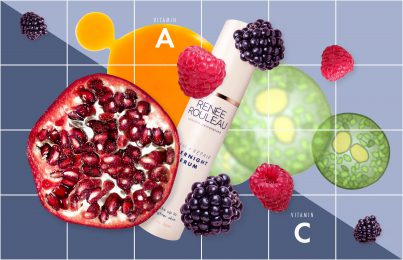
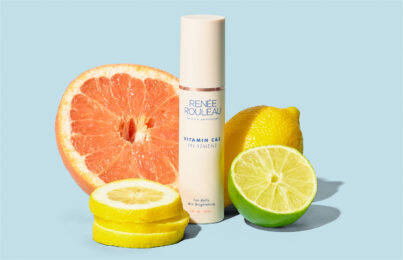
You’ve heard from time to time people being asked about what their “desert island” product would be – the one product that they just can’t live without. That’s an easy one for me as I do have a very favorite Renée Rouleau product, and that’s my Vitamin C&E Complex. Now of course, if I was truly on a desert island I would have to bring my Daily Protection SPF 30 (which is in my top five list), but the Vitamin C&E Complex has just been a miracle worker for my skin.

Fades brown spots:

For starters, I can get hyperpigmentation (brown spots) in the summertime when it’s hot since heat stimulates melanin activity, and as I’ve gotten older with increased hormones this can trigger melanin too. My Vitamin C&E Complex uses a powerful blend of antioxidants, such as Magnesium Ascorbyl Phosphate, which is a proven melanin suppressor to fade and control stubborn skin discoloration and brown spots. Read skin tips to reduce brown spots and hyperpigmenation.

Offers additional sun protection:

Because it contains Vitamin E along with Vitamin C, it can provide four times the protection of sunblock alone when worn underneath (according to N.C.-based Duke University Medical Center research). So since I slather in my Daily Protection SPF 30 every day of the year, from sun up to sun down, I appreciate the extra boost of protection it provides… Read more

Related Posts with Thumbnails

Next Page »

Subscribe to the Beautiful Skin RSS news feed  
Archives
Categories
Subscribe to the Beautiful Skin RSS news feed  
Archives
Categories
-->