How to Get Rid of Back Acne

As someone who has struggled with back acne during my teenage years, I am very familiar with this troubling condition. Here are my expert skin tips for reducing, controlling, and possibly curing back blemishes and breakouts.

Shower Often
The people that are most likely to get back breakouts are the ones that produce excessive oil. Generally, those who have oily skin on their face will also have excessive oil production on the back as well. Since oil is a breeding ground for bacteria, one of the ways to reduce back breakouts is to shower often – and that means twice a day. Keeping the skin clean can make a huge difference.

Use an Antibacterial Cleanser
Every time you shower, I suggest using a powerful antibacterial cleanser to deep clean the skin, remove oils, and reduce acne-causing bacteria. It is hard to find a body cleanser on the market that will do the trick, so using a face cleanser for acne-prone skin is recommended. Look for a cleanser that is sulfate-free (that does not contain Sodium Laureth Sulfate) and uses acne-fighting salicylic acid. AHA/BHA Cleansing Gel works very well to help fight breakouts without over-drying the skin.

Be Sure to Exfoliate
Since back breakouts can be made worse when the skin has an abundance of dead skin cells on the surface, it is crucial to gently remove the cellular buildup by exfoliating the back every time you shower. It can be hard to reach all the way on your back to do it yourself, so a simple solution to that is applying your antibacterial cleanser directly to an Exfoliating Body Cloth. It’s similar to a loofah, but much thinner. Regular loofahs, due to the thick texture and their weaving pattern, do not dry very well, making them a breeding ground for bacteria. The last thing you want to do is add bacteria to your back when you are trying to get rid of it. The Exfoliating Body Cloth is very thin, and can dry easily, thus avoiding bacteria growth. But, due to its stretchy material and square shape, once you apply the cleanser to it, if you hold opposite corners, with your right hand holding one corner over your top right shoulder, allowing the cloth to come diagonal down the back, with the left hand holding the opposite corner down on your left side by your waist, you can easily move it in a back and forth motion. When doing this, be sure to bend forward and curve your back. This will allow the cloth to work well on the top of the back which is usually where most back acne occurs.  By using the Exfoliating Body Cloth along with the acne-fighting ingredients, it allows the cleanser to work much better and deeper within the skin… Read more


Skin Care Ingredients to Use and Avoid for Problem, Acne-Prone Skin

When it comes to getting the best results from your skin care products, it’s so important to use and avoid certain skin care ingredients.

PROBLEM, ACNE-PRONE SKIN

Use:

- Salicylic Acid. This is an antiseptic exfoliator that offers anti-inflammatory benefits for soothing acne conditions. (Found in Renée Rouleau AHA/BHA Cleansing Gel)

- Beta Glucans. This yeast extract helps to make skin less sensitive over time and encourage less breakout activity. (Found in Skin Correcting Serum)

- Tea Tree Oil. This offers disinfectant properties to destroy acne-causing bacteria and keep pores clean. (Found in Tea Tree Anti-Blemish Lotion)… Read more


How to Squeeze a Blemish

While I don’t advocate squeezing your own blemishes, it is a reality that people will take matters into their own hands when they get up close to that mirror, so here is my expert advice for the safest way to do it without making it worse and creating further damage to the skin.

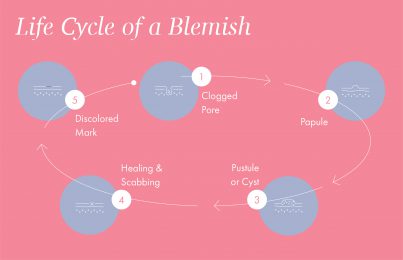
As I’ve always said, the issue isn’t really just the blemish itself because most blemishes (other than acne cysts) will come and go within a week or so, but the red, dark or purple mark leftover from picking can linger for months. So the goal is to get the infection out of the skin in the least invasive way.

Step #1 Assess the blemish. As almost always is the case, a blemish that has just appeared is not one that you should pick at. The reason is because if it’s a pustule-type blemish (the only squeezable kind where the whitehead comes to the surface) it usually takes at least 1- 2 days to get there. Picking a blemish before it’s “ripe” is an absolute no-no. If you do not see the whitehead on the very surface of the skin, do not touch it whatsoever as you can damage the surrounding tissue and make the infection worse than it already is. Do not proceed to step #2 until you see a visible whitehead on the very surface of the skin… Read more


What’s the Best Spot Treatment for Blemishes?

No one likes getting blemishes, and certainly once you get one, you want it to go away as fast as possible. Many companies make products designed to be used as spot treatments to dry up the blemish to ensure a quicker recovery. Knowing that not all skins are equal (which is why my line is based on nine skin types) certainly not all blemishes are equal either.

So which spot treatments are the best for your blemishes?

Here is my collection of acne spot treatments including what kind of blemish they should be used to treat.

Night Time Spot Lotion: Formulated for surface, pustular blemishes to dry out the infection for a fast recovery.

Read: Got a Blemish? How to Heal Blemishes Fast

Anti-Cyst Treatment: Used to treat cystic blemishes – those hard sore, “underground” blemishes that rarely surface and can linger for weeks.

Read: Is a Cortisone Shot The Only Option for Treating Acne Cysts?

Daytime Blemish Gel: For use under makeup to prevent dirt and debris from getting into blemish openings and impeding the recovery process. It creates an invisible seal to keep debris out, while using advanced acne-fighting ingredients to heal inflammation… Read more

September 2, 2011 by  
Filed under Acne, Blemishes, Problem Skin Treatments, Skin Care Tips


Is a Cortisone Shot the Only Option for Treating Acne Cysts?

Of all the types of acne someone can get, cystic acne is both the most frustrating to treat and can be the most damaging to the skin.

What is cystic acne? Those hard, painful blemishes that develop deep within the skin, often appear on the chin or jaw line, and can linger for weeks.

Cystic acne, whether chronic or intermittent, is one of the most frustrating types of acne lesions to deal with.  What happens in cystic acne is not a pretty picture. It is typically triggered by a surge in hormones, such as occurs during a woman’s menstrual cycle. For some unknown reason, the skin’s oil glands become hypersensitive to this cascade of hormones, and react by overproducing sebum–so much, in fact, that the oil gland itself becomes engorged, swollen, and hardened with the excess. Unable to push the extra oil into the lining of the hair follicle (which leads to the surface of the skin via pores), the gland bursts underneath the skin. This causes acute inflammation and irritation, and leads to the redness and soreness of cystic acne. Because these lesions start so deep in the skin, scarring (red, dark and purple marks) is an all-too-common side effect.

Read: How Can I Fade My Acne Scars?

They are most often resistant to most topical acne treatments since products designed for treating acne generally work on the surface to dry out the bacteria – but in the case of cystic acne, the infection is not on the surface of the skin but rather down in the deeper layers. Have you ever used a drying spot treatment on a cyst to not only find that you’re still left with the sore bump on the skin, but now you have dry skin on top?… Read more

Related Posts with Thumbnails

Next Page »

Subscribe to the Beautiful Skin RSS news feed  
Archives
Categories
Subscribe to the Beautiful Skin RSS news feed  
Archives
Categories
-->