Sensitive skin has special needs. Skin care expert, Renée Rouleau, offers helpful tips and advice for keeping skin calm.
-Wash with a gentle cleanser. Washing your face in the morning and at night is essential to having healthy skin but what you also need to be conscious of is the cleanser that you use. Use a cleanser that will not dry your skin out because this will inevitably cause unwanted damage.
Many foaming and gel cleansers, made today, are formulated with ingredients like Sodium Lauryl Sulfate, Sodium Laureth Sulfate or Ammonium Laureth Sulfate. These are surfactants; a cleansing agent that cuts oil from the skin. These ingredients are simply too harsh and will strip the water out of the skin after every washing, leaving the skin feeling tight and creating more irritation and potential redness. Keep in mind– More lather, more drying. Less lather, less drying. See the collection of Renée Rouleau cleansers that are sulfate-free.
P.S. Bar soaps are a no-no. Even if it claims to have moisturizer added, even if it’s some fancy kind that is imported from France that French women use to care for their skin, and even if it’s really expensive…do not use them on your face! …Please. Read why you should never use bar soap.
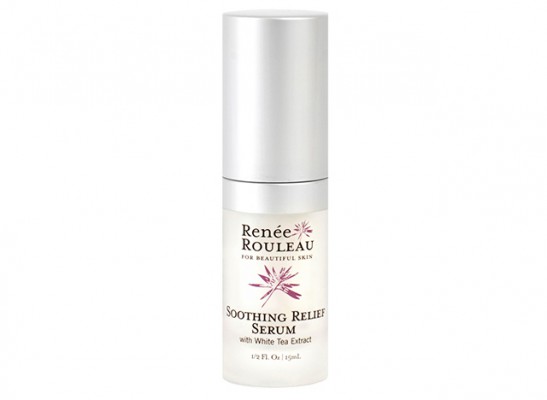
-Use soothing ingredients. Use skin care products with anti-inflammatory and calming ingredients such as chamomile, sea whip, azulene, and white tea to infuse a natural and beneficial, comforting treatment into your skin.
-Avoid microdermabrasion. This popular treatment is beneficial for exfoliation but it can be harmful to sensitive skin. Sensitive skin is caused by a weakened protective barrier that allows irritants to penetrate and moisture to escape. Because these treatments are designed to break down the skin’s barrier in an aggressive way, it will only aggravate sensitive skin. Instead, opt for mild chemical peels, ultrasonic exfoliation, or mild facials. See the chemical peels and facials offered at Renée Rouleau Skin Care Spas.
-Keep your skin care products cold. In the summer time when it is hot outdoors the increase of blood flow naturally increases heat and sensitivity in the skin. Try keeping your skin care products in the refrigerator. Cleansing, toning and moisturizing with cool temperature products will constrict the capillaries to ease redness and irritation.
-Repair dry skin. Did you know that dry skin causes tiny, superficial cracks in your skin? Ouch! These invisible cracks in the skin are what are referred to as a damaged protective barrier. This is when your skin shows redness, feels tight and dry and becomes easily-irritated by even the most gentle of products. A damaged barrier is the underlying cause of sensitive skin and can be created by over-heated skin, rosacea, the use of harsh products, and the overuse of exfoliating products. If your skin is dehydrated and irritated, you must use barrier-repairing products containing lipid-rich oils to reduce skin sensitivity and dryness.
-Avoid common irritants. Pull out your skin care products and look at the ingredient labels. If they include any of the ingredients listed below, we highly suggest that you should stop using them.
SD Alcohol 40 – the “bad” solvent alcohol commonly found in toners. It is extremely drying and irritating to the skin. (Note: Cetyl Alcohol is completely different and is not a drying ingredient. Read why all alcohols are NOT harmful to the skin.)
Denatured Alcohol – similar to SD Alcohol but usually found in European skin care formulas more often than American
Sodium Lauryl Sulfate – a harsh detergent found in cleansing gels and is extremely drying and irritating to the skin
Sodium Trideceth Sulfate – same as above
Sodium Laureth Sulfate – same as above
Ammonium Lauryl Sulfate – a harsh detergent found in cleansing gels and is extremely drying and irritating to the skin
Ammonium Laureth Sulfate – same as above
Fragrance – the #1 cause of allergic reactions to products. Avoid products containing the word “fragrance” or “parfum” on the ingredient listing
Dyes and colorants – An unnecessary chemical used to give a product its color and can be a skin irritant. Commonly listed as the very last ingredient with the words FD&C
Apricot kernels, or seed/shell powders-naturally made particles found in facial scrubs can scratch and irritate the skin causing bacteria to spread
Alpha Lipoic Acid, L-Ascorbic Acid and Ascorbic Acid – Used in Vitamin C antioxidant formulas, the acidity may burn and irritate sensitive skin. Read why you should avoid Vitamin C products that sting when applied to the skin.
The bottom line: Sensitive skin conditions have been on the rise, but by treating your skin gently, you can significantly control signs of irritation and inflammation.
Read: When Is It Okay For My Skin Care Products To Tingle?
Which skin care products are best for you? See our nine skin types or take the Skin Type Quiz and get products recommended.
Need expert advice from a licensed esthetician? Schedule a virtual consultation to get customized advice in person, over the phone or online via Skype or FaceTime.
For more expert advice check out the blog. Also sign up for our skin tip e-newsletter, follow Renée Rouleau on Twitter and Instagram and join the discussion on our Facebook page. You’ll be your own skin care expert in no time. Get the #ReneeRouleauGlow!

Celebrity Esthetician & Skincare Expert
As an esthetician trained in cosmetic chemistry, Renée Rouleau has spent 35 years researching skin, educating her audience, and building an award-winning line of products. Her hands-on experience as an esthetician and trusted skin care expert has created a real-world solution — products that are formulated for nine different types of skin so your face will get exactly what it needs to look and feel its best. Trusted by celebrities, editors, bloggers, and skincare obsessives around the globe, her vast real-world knowledge and constant research are why Marie Claire calls her “the most passionate skin practitioner we know.”